Carrying Euro


Carrying Euro

Carrying Euro

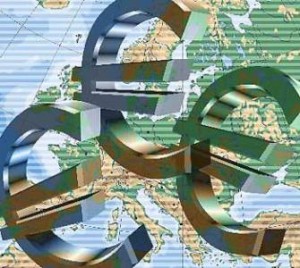
If you’re heading to Europe then you will be required to take with you some local currency. In many cases this will involve carrying Euro as so many European countries have now moved over to that currency. The problem with carrying Euro however is that it means that you are potentially susceptible to losing them or having them stolen. When we are in our own country we normally hold onto just a debit card or credit card, but if we’re travelling abroad in Europe then this will often mean that we can’t use these cars without some kind of hefty fine.

So how do you get around the problem of carrying Euro when staying in the country? Fortunately there are a few things you can do. Here are some suggestions:

Purchase a safety deposit box: Safety deposit boxes are highly useful for storing your Euros and your other belongings. These are the same as in any other country and provide you with a metal tin that can be locked (often digitally) and to which only you know the PIN number to get in. Then you only need carry Euro that you need for that day.

Travellers cheques: Another option is to take travellers cheques which again means you only carry Euro when you need them. These are cheques that can only be cashed by you and so are worthless to steel, but that can be exchanged for money at many European hotels. The downside is that it can sometimes be a pain finding places to change them – and just because no one else can use them doesn’t mean it’s not annoying if they go missing and leave you penniless.

International cars: A great idea is to set up a card that you can use internationally without a fee. This can mean some credit cards, or debit cards such as Nationwide. This then means free withdrawals so you don’t need to carry Euro at all.

Posted under Europe, Sport

This post was written by admin on January 6, 2011

Tags: , ,

European Forests

European Forests

European Forests

Everyone rages about how great beach holidays are and the appeal isn’t hard to see – they’re associated with relaxing in the sun, with swimming in the sea and with watching the waves lap against the shore. However while beaches are great, forests offer some great locations to visit too with wildlife, lush green fauna, lots of walks and a sense of peace of quiet and being close to nature. There are some fantastic European forests that are worth visiting for anyone who enjoys this kind of scenery, either as a day out, or as a place to stay in itself if you can get yourself a nice little log cabin. Some great European forests to check out include:

The New Forest, England: The New Forest is a very expansive area of protected forest in England. It spans a large area and there are regularly events there such as festivals and markets. During the winter there is a great Christmas display where the forest becomes a ‘winter wonderland’.

The Black Forest, Germany: Named thus because of the thick conifers that block out the light in the forest, the black forest is one of the most famous European forests and has a very magical feel about it – especially around Christmas. Set in the mountains, and the birthplace of many stories and a wealth of food (such as the titular gateau and ham) this feels like the perfect setting for a fairy tale.

Belovezhskaya Pushcha, Belarus: At the watershed of the Baltic and Black Sea is another spectacular addition the number of European forests. Filled with Evergreens and broad leaved trees it is a very lush and green environment and a great place for spotting Bison.

Pirin National Park, Bulgaria: If you fancy exploring some European forests at a higher altitude then Pirin national park is the place for you at over 2,914m and featuring caves, waterfalls and a limestone landscape all in a great pine wood forest.

If you are willing to look around though there are many other European forests and these offer some great days out. So when visiting Europe make sure that you don’t only visit the beaches and cities, but consider the forests as well for some great scenery and especially if you enjoy hiking.

Posted under Europe

This post was written by admin on January 5, 2011

Tags:

Booking Europe Holidays

Booking Europe Holidays

Booking Europe Holidays

Europe provides an incredibly varied range of cultures and sites for you to visit and this makes it one of the very best continents to visit whether yo are going on holiday or want to go travelling. The question is though, how do you go about booking these holidays and what’s the cheapest and most efficient way to go about booking Europe holidays?

Many people with go through estate agents when booking Europe holidays. This has its perks and many people will enjoy using this method for its simplicity and the fact that its being organised by an official body meaning you have support should anything go wrong. However this is not the cheapest way to go about booking Europe holidays, and if you are willing to take a little more risk, then you can get a more varied experience at cheaper prices.

One other way to go about booking Europe holidays is through Expedia. This is a site that lets you book holidays all around the world and ‘build’ them yourself by selecting each part individually. This gives you more flexibility to move between hotels during your stay or to fly at times more convenient to you. At the same time it will usually be much cheaper than booking Europe holidays through a travel agent.

If you are willing to be even more adventurous when booking Europe holidays then you can also book elements of your journey separately. Many flights can be found cheaply by searching online and travelling at unusual hours, and you can find lots of hotels this way not available through package websites. Hotels.com is a particularly good site for booking European holidays – not for flights but for a vast range of very affordable hotels.

Of course the final option is to forego booking Europe holidays altogether and to instead ‘wing’ it while you’re out there. You can get many cheap flights if you are willing to turn up on the day and ask for flights with spare seats and you can get similar discounts by turning up to hotels on the day. Normally it will be possible to find hotels with space and hostels almost always can provide a cheap bed.

Choosing not to go through the process of booking Europe holidays is a risky decision and it will mean that you are forced to be more flexible and less picky. If you are travelling with a family in tow and lots of luggage then, it is not normally advisable, however if you are going to

Posted under Europe, Travel

This post was written by admin on December 27, 2010

Tags: ,

European Phrasebooks


European Phrasebook

If you’re thinking of traveling to Europe, then there’s a strong chance you’re considering investing in European phrasebooks. These are highly useful for crossing the language barrier, and just as when you are traveling abroad elsewhere, it is a good idea to have a guide when going to Europe in order to be able to make basic conversation and get around. There are some very basic phrases which most European phrasebooks should include which will help you in the most common situations. For example you should make it your business to try and learn the words for basic manners as well as for ‘hello’, ‘goodbye’, ‘where is?’, ‘please may I have?’, ‘bill please’, ‘what is?’ and ‘do you speak English?’. These will all help you to be able to communicate enough to order things in shops and to get help when you’re lost or confused.

Of course European phrasebooks are more crucial in some parts of Europe than they are in others. If you are traveling to England and you speak English (which it’s fair to assume you do if you can read this), then you won’t have much need for a phrasebook. However that said there are European phrasebooks that focus on American to English translations and this provides an interesting and sometimes humorous insight into the differences between these languages. This can be quite useful to read as well before heading to the UK to prevent mix ups when buying pants for example.

Similarly in most areas of Western Europe European phrasebooks might not seem as necessary – if you are traveling to the built up areas of France, Germany or Italy for example then many locals will be able to speak English. However you would be surprised still at how many don’t and apart from that it’s also polite and fun to try and speak a bit of the local language. Most locals will appreciate your attempts and will be more warm towards you as a result so even when traveling to Western Europe, European phrasebooks are very useful.

If you are heading to Eastern Europe though, then European phrasebooks become a lot more important and you will find that in many areas that don’t have big tourist industries a lot of people don’t speak any English and nor will there be much help for English speaking people in the signs and information. It’s important then to pick European phrasebooks that translate both ways to allow you to interpret signs and maps, to help you to ask questions and to facilitate basic conversation. Even if you can’t translate quickly enough to understand what someone is saying to you in real time, you might be able to let your conversation partner see the book in order to point to what they mean.

Another option is to forego traditional European phrasebooks and go with an electronic device or one of the many downloadable apps for your Smartphone. These are getting more and more advanced and some even attempt to use voice recognition software in order to act like a real life Babel’s fish. While these attempts are admirable, they are still a few years away from being that effective. Be wary too that many phone apps of this nature require an internet connection which you might no have abroad.

Posted under Europe, Travel

This post was written by admin on December 20, 2010

Europe

Europe

Europe is a large continent (one of the seven in the world) which borders the Arctic Ocean, Atlantic Ocean, Mediterranean Sea, and Asia among others and which contains countries such as France, Germany, England, Turkey, Greece, Poland, the Czech Republic, Bulgaria and many others. It is also the second smallest continent in the world (roughly 10,180,000 square kilometres which makes up about 2% of the surface of the world). Despite it’s small size however, Europe has the third highest population of any continent with 11% of the world’s population behind Asia and Africa. The largest country in Europe is Russia, though this spans both Europe and Asia, while the Vatican City situated in Rome is its smallest.

Europe has had a tumultuous and highly interesting history. Ancient Greece can arguably be described as the birthplace of Western culture with many very important thinkers and artists at the time residing there. Ancient Rome also played an important part in Europe’s early development as the Roman empire introduced roads and sewers to much of Western Europe and beyond.

Europe would play a larger role in global affairs following the 16th Century during ‘colonialism’ when many European nations such as England, France and Spain would control much of the world including America, much of Africa, a large part of Asia and Oceania. Europe also played a very large role in both world wars; the first a result of Kaiser Wilhelm the Second and tensions with England, the second a result of Adolf Hitler’s trying to recapture much of the land they lost during the Treaty of Versailles (and more), with their invasion into Poland being the catalyst for war. Following this Europe would be divided into two parts by an ‘Iron Curtain’ during the cold war – NATO in the West and the Warsaw Pact in the East.

More recently European integration has resulted in much of Europe finding strength in numbers. The EU is a union of currently 27 states of Europe, committed to integration and providing a standardised system of laws aimed at creating a single market to encourage the flow of goods, people, services and capital. This has resulted in the abandonment of passport controls between the borders, as well as a common currency adopted by 16 of the 27 members called ‘The Euro’.

While this integration makes Europe a convenient place to visit – allowing easy transportation between countries etc, its colourful history means that it remains a highly diverse place to visit with many cultures, traditions and climates. Visiting the Czech Republic could not be more different from visiting Spain or Southern France, and visiting the cheque republic provides an entirely different experience to visiting Bulgaria or Switzerland. As such there is a lot of tourism in Europe, and it continues to play an important role on the world stage.

Posted under Europe

This post was written by admin on December 20, 2010

Tags: , ,